

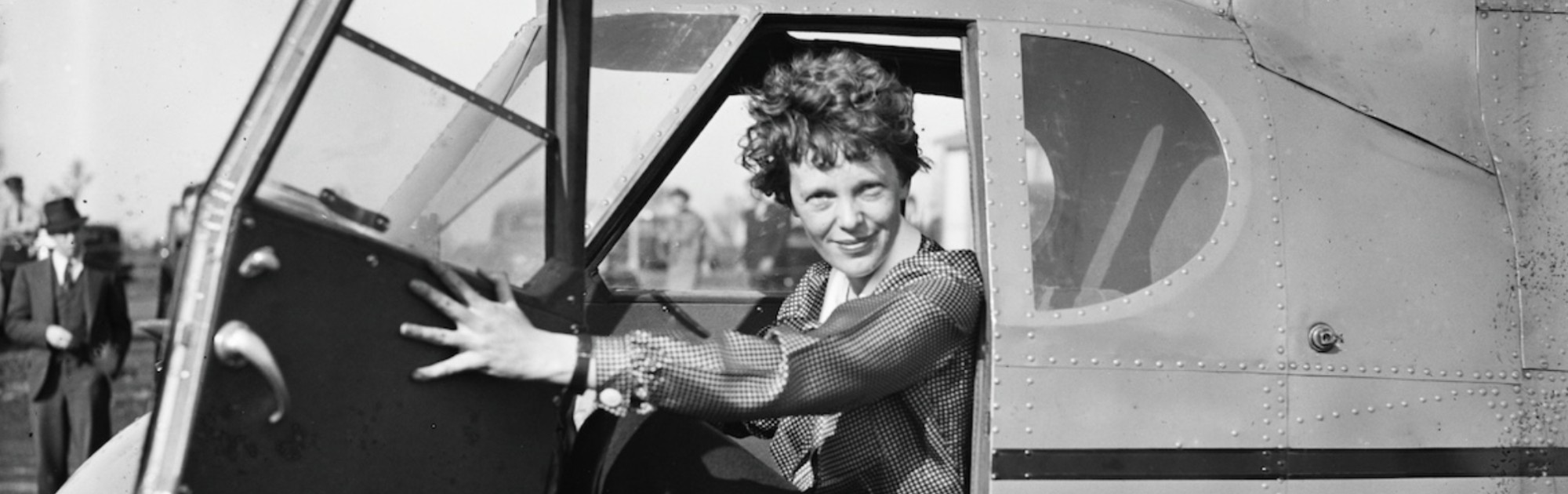

When a woman reaches the top, the story is told of her talent, tenacity, education and, sometimes, a few defeats that proved instructive. It would be interesting to add another entry to the biography: who lent her a hand when she was not yet someone it paid to help?
Who introduced her to people, prepared her, encouraged her, who paid for a course or suggested she apply for a job she considered beyond her reach?
This is the perspective from which women’s professional associations are worth considering. Their most significant contribution is to be sought in the years before the photographs with distinguished members.
In 1868, in New York, the journalist Jane Cunningham Croly helped found Sorosis after being excluded, as a woman, from a press luncheon in honour of Charles Dickens. The club’s history records a small masterpiece of convivial pedagogy: a gathering at which women had been obliged to listen to men without speaking was followed by a tea at which the men had to take the silent role. Eventually there was a dinner on equal terms, where no one was denied a voice.
Since then, women’s organisations have taken various forms: cultural clubs, professional networks, service associations, training and mentoring programmes. Soroptimist, Zonta, the Business and Professional Women networks and, more recently, Professional Women’s Network, to name a few, belong to this history, albeit with different aims and means.
To understand the importance of these associations, we can follow an extraordinary person. Beatrice Shilling, the British engineer, is a magnificent example. In the 1920s she worked as an apprentice with Margaret Partridge, who was active in the Women’s Engineering Society. That environment helped her prepare for university and obtain a loan to continue her studies. Her university record was a masterpiece: it registered her as ‘Mr. Beatrice Shilling’. Evidently, the form had less imagination than the student.
During the Second World War, Shilling developed a device that mitigated a dangerous fuel-supply problem in British aircraft engines during certain manoeuvres. The ingenuity was hers; there is no doubt about that. Her apprenticeship, the encouragement and the support for her studies had helped put her in a position to exercise it. Recognising this sequence makes her achievement more intelligible, without taking anything away from her.
Another name worth recalling here is Andrea Ghez, who won the Nobel Prize in Physics in 2020. In 1987 she had received an Amelia Earhart Fellowship from Zonta. Looking back on it, she emphasised the value of that early recognition and the confidence placed in her in an environment with few women. In 2021 Zonta made her an honorary member. Here the dates matter: the fellowship preceded the Nobel Prize by thirty-three years. We can document support that came at the beginning, without claiming to credit it with a scientific discovery.
An Italian example that allows us to trace this path is that of Daniela Pedrini, an aerospace engineer. In 2013 and 2014, during her doctorate at the University of Pisa, she received two Amelia Earhart Fellowships from Zonta International, each worth 10,000 dollars, to support her research. In 2015 she took responsibility for cathodes for electric space propulsion at SITAEL. Her relationship with the association then grew: in 2017 she founded the first Italian Zonta e-club, and in 2024 she became chair of the international committee for the very fellowships that had helped her. It would be arbitrary to attribute her career to the association, but the support she received and the commitment she gave in return are documented. There is also something particularly beautiful in the transition from applicant to head of the programme: having known the value of a helping hand and finding oneself in a position to extend it to others.
This is the kind of biography that reveals the sometimes life-changing importance of associations: it contains a before, a concrete intervention and an after. And it allows us to address the delicate point. How much of the success belongs to the person, and how much to the fact that an organisation created the conditions for her to express her abilities and achieve success?
We can try to reconstruct a contribution: a fellowship made a course of study possible, a mentor helped prepare a negotiation, then an introduction opened the door to an interview. In the end, someone still had to study, negotiate and sit through that interview. Personal merit, after all, also encompasses what one has managed to do with an opportunity received.
In Italy, this history has varied roots and developments. AIDDA, the Associazione Imprenditrici e Donne Dirigenti d’Azienda, was founded in Turin in 1961 at the initiative of Elisabetta Tamagnone. At its origin lies an encounter with a Dutch businesswoman: an international contact that became an Italian organisation. This is already a small practical demonstration of the value of relationships.
GirlsRestart, by contrast, was born during the first lockdown of 2020. Its founders are Barbara Cominelli and Valeria Casani. The community has made sharing expertise, mentoring and supporting professional projects into tools for making a fresh start. PWN, Professional Women’s Network, operates through an international network and city-based organisations, including Milan and Rome, whose presidents are Vanina Stagno Piantanida and Laura Mercuri respectively.
For anyone writing about these organisations, the famous name who founds, chairs or actively participates in one is an irresistible and easy shortcut, since a photograph is all it takes to document a presence. Documenting a transformation is another matter: it takes time, stories, testimony and some checking too. The risk is that the already established member becomes more visible than the woman who, thanks to some help, has made the decisive but unspectacular transition to becoming the person she is afterwards.
It would be wrong, however, to infer from this asymmetry vanity on the part of the associations or ingratitude on the part of the participants. Careers have many causes. People may wish to protect difficult passages in their own histories. And a cautious association may hesitate to claim credit for a success towards which many have worked, beginning with the person herself. All of this is possible, and all of it must be checked in individual cases.
Research, too, invites us to look inside the activities. A study by Hein, Diehl and Kreutzer, published online in 2025 in the Journal of Management, examined forty women’s networking events and collected seventy-five interviews. Its title contains a telling expectation: Magic Will Happen if You Gather Us in One Room. Bringing women together in the same room does not in itself guarantee useful relationships: the structure of the meetings and the role accorded to participants matter. The room may be full, the buffet impeccable, and the next step still entirely to be worked out.
Finally, there is giving back. Here too, looking only for public expressions of thanks narrows the field too much. Giving back can mean funding a fellowship, introducing a professional woman to a client or devoting time to someone just starting out. Gestures that attract little notice can demand a great deal and yield substantial results.
Vanina Stagno Piantanida, president of PWN Milan, offers a two-sided case: having joined the network in 2015, she has participated in mentoring programmes both as a mentor and as a mentee. Her biography within the association documents both positions, even before it permits any judgement about the network’s effect on her career. It is a good place to begin telling the story of how help circulates.
The most satisfying recognition for an association is to be able to trace its work in someone’s life. And for those who have succeeded, acknowledging a helping hand received can become another way of extending one.