

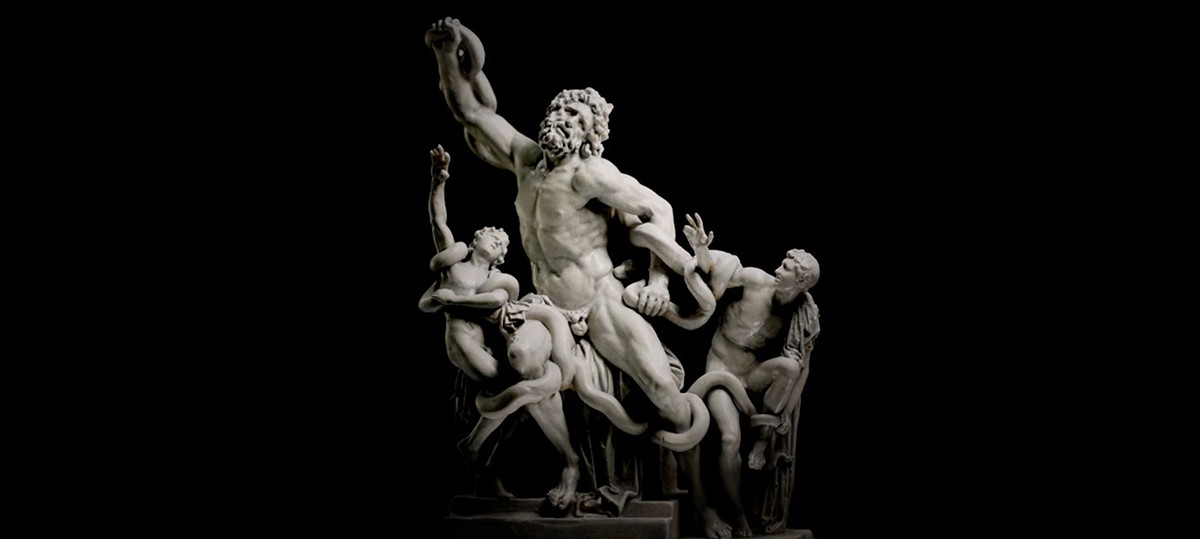

In Greek mythology, having children was a risky business, especially for anyone with a kingdom. Sooner or later a prophecy would arrive: the child would overthrow his father, do something to his mother too, and then the father would often kill him as well, just to be safe. Rather than offering reassurance about the continuity of the dynasty, the birth of an heir became a threat to the founder’s staying power.
Cronus is the most explicit case. Warned by Gaia and Uranus that he would be overthrown by a son, he swallowed his children as soon as they were born. Rhea managed to save Zeus by replacing him with a stone wrapped in swaddling clothes. Zeus grew up and, as was to be demonstrated, overthrew his father.
Once in command, Zeus showed that he had chiefly learnt the wrong part of the lesson. According to the prophecy, his Metis would bear first Athena and then a son destined to reign in his place. Zeus therefore swallowed Metis, already pregnant with Athena, preventing the birth of his future rival. In this story, succession is indeed blocked: power remains with the father, while the possibility of surpassing him is eliminated before it even exists. Athena would then be born in spectacular fashion, with heads split in two magically coming back together: that was mythology. Things that seemed beyond repair were repaired.
Among mortals, Laius of Thebes sent little Oedipus to his death because the Pythia’s oracle had announced that Laius would die at his hands and that Oedipus would marry his mother (Oedipus’s).
Oedipus survived and, many years later, did indeed kill Laius, without knowing that he was his father, and took his wife, who was the mother of Aesop himself.
Then there was Acrisius, who, warned that he would be killed by the son of his daughter Danaë, locked her away and later abandoned mother and child at sea. His grandson was Perseus: he survived and eventually struck him accidentally with a discus during a contest. Even precautions were not enough on Olympus.
Read alongside certain contemporary family businesses, which in some respects is to say on the new Olympus, these stories take on a curious familiarity. The founder wants his children to carry on his work, but may find it much less desirable that they should start making decisions. He wants them well prepared, provided that their preparation does not produce overly independent opinions. He would like them to be enterprising, only to question their intentions when they take the initiative. Just imagine how much founders fear an alliance between the shareholdings of the eldest son and the founder’s wife.
The point, in this reading, is the overlap between the company and personal identity. Someone who has built a business may have concentrated their skills, relationships, sacrifices and social recognition within it. Relinquishing a decision then means losing something more than an organisational prerogative. A capable child makes it clear that the company might function even without its founder. This is good news for the business, but it can be an uncomfortable experience for the person who founded it. And so it is better to extinguish every light that shines.
Thus the handover remains forever imminent and never present. The children are still young, then still inexperienced, then by now too different from the person who ought to entrust them with command. If they remain outside the decision-making process, they do not gain the experience required to enter it; if they are too competent, their language is no longer their father’s: little self-fulfilling prophecies.
Of course, this is an analogy, not a diagnosis of family businesses. But the ancients had grasped a recognisable fear: seeing in one’s children’s growth the announcement of one’s own irrelevance.